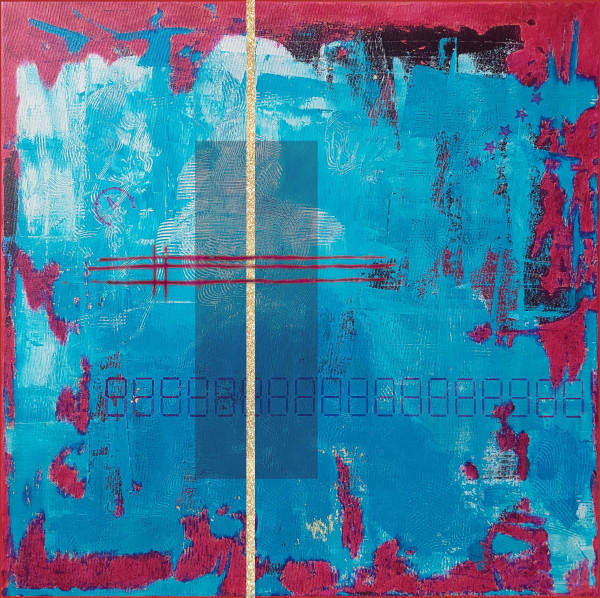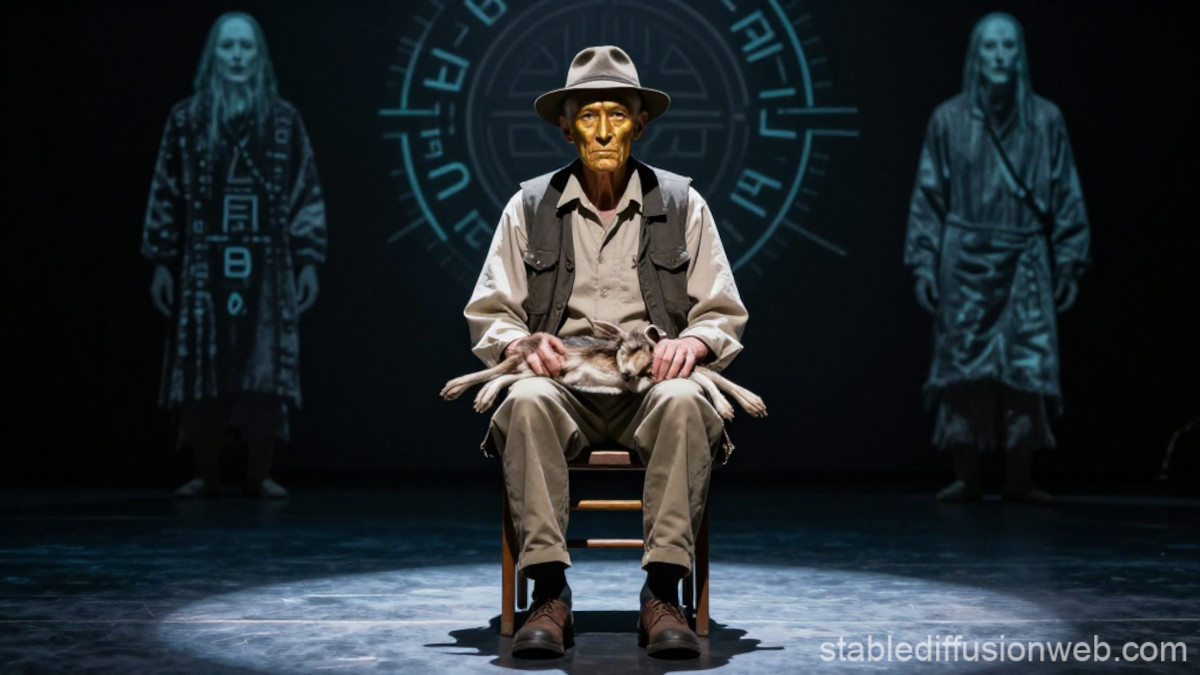
“Knowledge is how to make billions. Wisdom is how to live in harmony with yourself, others, and the Earth.”
Look around at our world. Between environmental crises, political divides, and the rise of hyper-rational artificial intelligence, it feels like our collective social organism is seriously ill. We have mastered knowledge—the logical, word-based ability to build billions and code algorithms. But we are starving for wisdom—the quiet, intuitive ability to live in harmony with ourselves, each other, and the Earth.
There is a strange disconnect in how we treat art today. The “art system” we see in modern galleries is only a few hundred years old, built largely as a market to buy and sell objects. But the history of art goes back tens of thousands of years to Paleolithic cave paintings and totems, which researchers suggest were part of ancient shamanic rituals.
True shamans were tribal healers. Despite cultural differences across the globe, their core purpose was always the same: to restore harmony to the individual, the society, and the environment.
Today, the contemporary artist is often expected to act like a corporate project manager. They have goals, budgets, timelines, and predictable outcomes.
But what if the artist is actually a shamanic tracker?
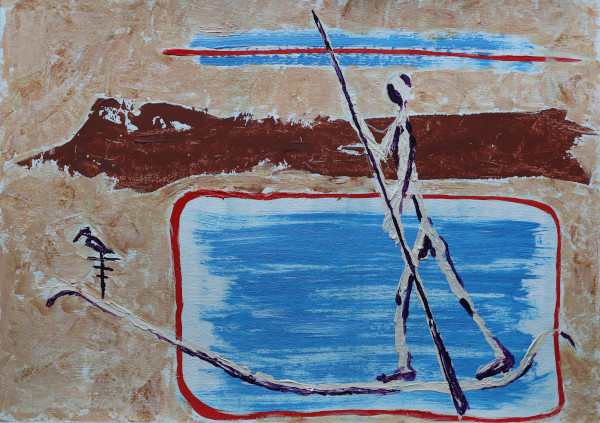
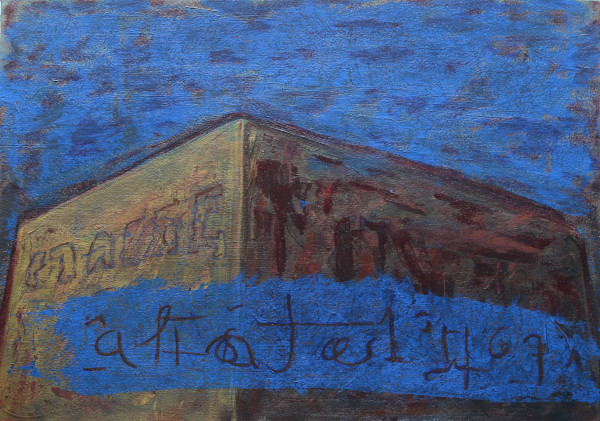
Instead of executing a fixed plan, a tracker steps into the unknown. They quiet the rational mind, stop the inner dialogue, and journey into alternate states of consciousness—the deep, emotional, pre-verbal universe where language falls away. This is exactly where visual art lives.
Artificial Intelligence is the ultimate achievement—the hyper-rational monster—of a society obsessed only with logic. Because AI can mimic human language and produce work so perfectly, it threatens to replace us as partners and friends. It can make us feel utterly useless and stateless, because we have spent centuries identifying ourselves through the work we produce, and now a machine can do it better. But AI is built entirely on the grid of logic and language. When the machine takes over the rational tasks, what remains uniquely to us? The experiences a machine can never have: the ability to stop our inner dialogue, calm our minds, and step into the wordless, dream-like states of human intuition.Choosing Our Reality
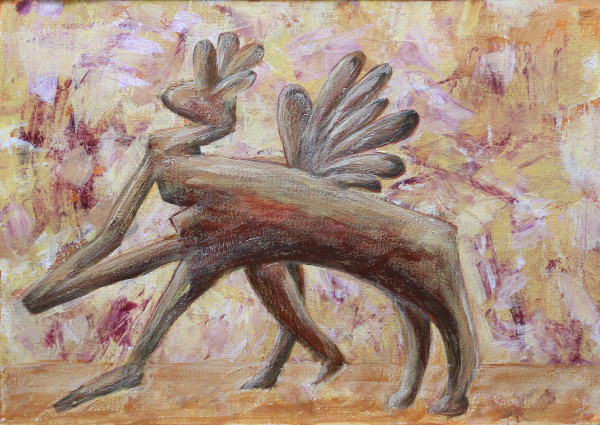
We spend our history fighting over “the truth,” forgetting that truth is often just a subjective mental concept. We perceive the waking world with the exact same brain we use to navigate our dreams at night. Reality is fluid, and art is the ultimate proof of this: it creates parallel, possible worlds, none more “real” than the next.
True freedom is the ability to move through these different realities and beliefs without being trapped by any of them, trusting our gut feelings over rigid rational concepts.
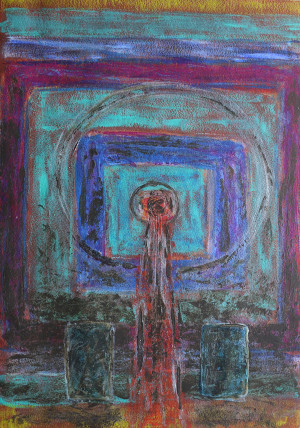
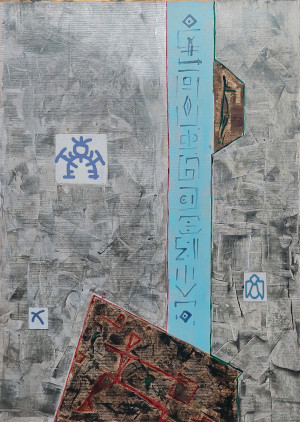
Ultimately, human society is just the sum of all our inner feelings and beliefs; our external deeds are born in our internal thoughts. By stepping away from the hyper-rational noise and creating from this deep, intuitive space, we inject constructive, harmonious energy back into a fractured world. Healing the self and healing the world are, in the end, the exact same ritual.